
The Truth about Carpet Dyeing
Here are 10 of the most common misconceptions about carpet dyeing:
Need advice on a stain or bleach spot right now? Call us or send a photo for a quick quote.
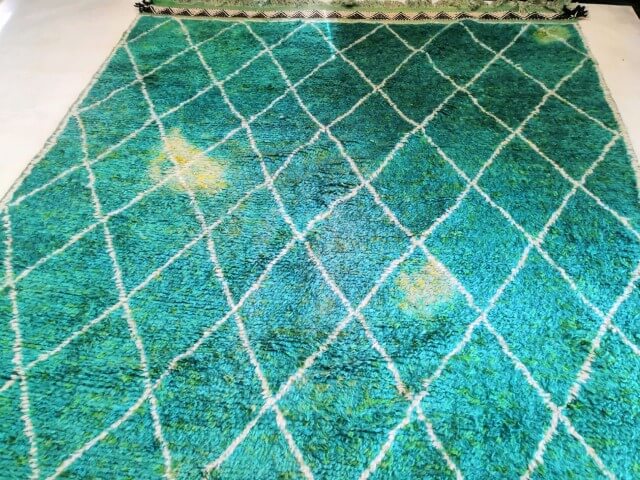 Not all carpets are candidates for dyeing. Wool (above) accepts dye beautifully, while Polypropylene cannot be dyed.
1. Any carpet can be dyed
Only wool and nylon carpets can be dyed. Polyester and polypropylene fibres don't have dye pockets so they cannot be dyed in the conventional way. However, we do offer specialised colour repair for Sisal.
2. One can dye a carpet any colour
The target colour is always dictated by the carpet's original colour. For example, one cannot dye a deep red carpet blue because the fibres will not accept enough new dye to overcome the red to change the colour family.
A carpet dyer can however, work with the existing red to dye the carpet a dark grey or brown.
3. One can dye a carpet a lighter colour
The process of dyeing carpets consists of adding colour so the result will always be a darker carpet.
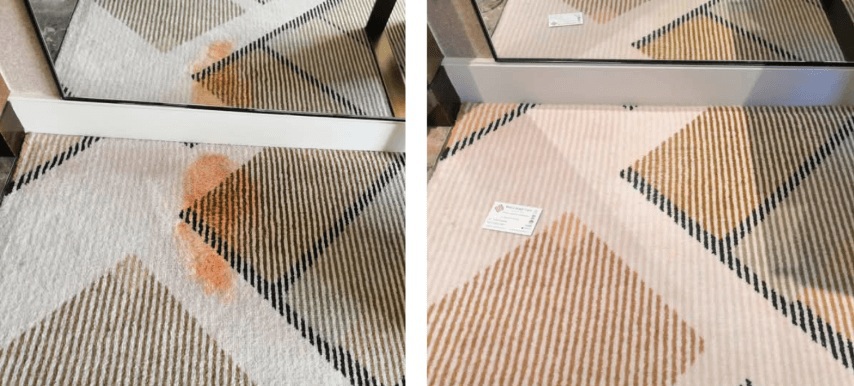 Dyeing isn't magic, it's chemistry. We successfully reduced this stubborn orange stain before re-dyeing the fibers to restore the geometric pattern flawlessly
4. Dyeing a carpet will cover existing stains
Dyeing a stained carpet will always result in ...you've guessed it, the same stained carpet...just a different colour.
This doesn't mean a stained carpet cannot be successfully dyed, but each stain would have to be removed, reduced and dyed individually if needed, before dyeing the whole carpet.
5. After dyeing, the carpet will be like new
6. Carpet dyeing is cheap
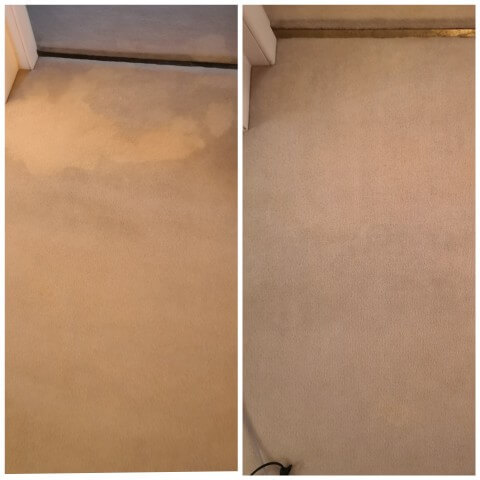 Professional results require professional dyes. We used high-grade acid dyes here to restore a completely uniform colour that won't fade or transfer.
7. Any dyes would work
8. Anyone can dye a carpet
9. Any stain can be bleached out and re-dyed
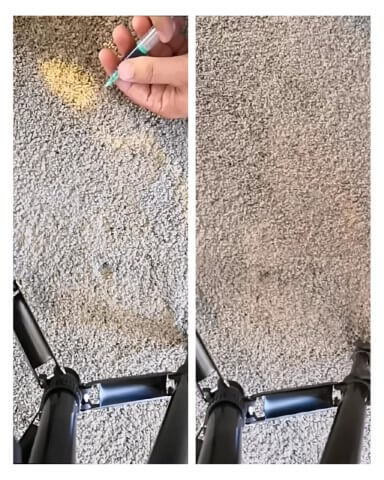 We use a syringe to inject the missing dye into the bleach spot, restoring the colour to match the surrounding area seamlessly
10. A bleach spot repair is always an invisible repair
11. Rugs cannot be dyed
 Print
Sitemap
Print
Sitemap
Call Us Now
Tel: 07564010847
Email: info@briocarpetcare.co.uk
Copyright © 2011-2025 Brio Carpet Care. All rights reserved.